
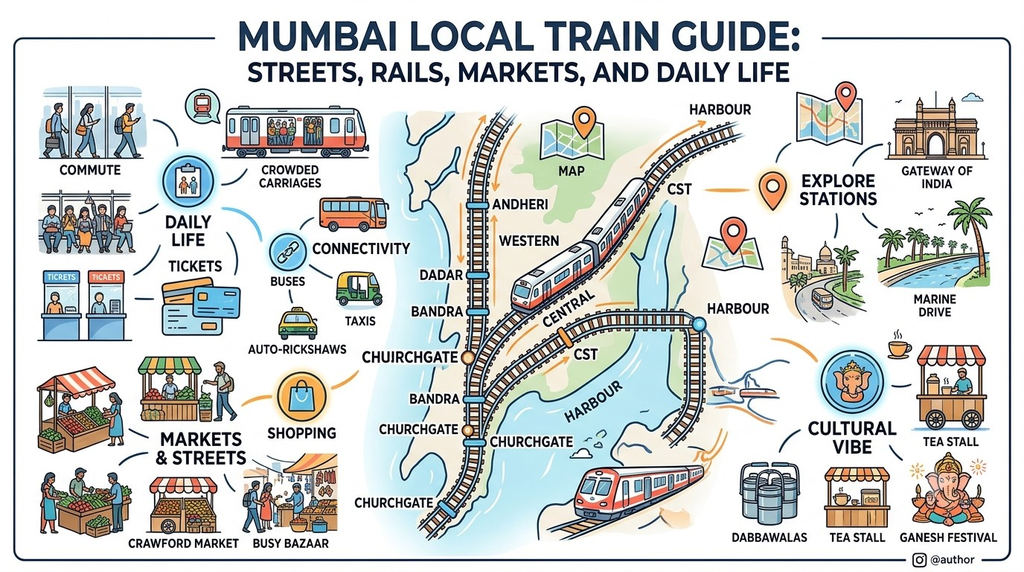
Living in Mumbai means learning the rhythm of the city fast. From early morning office rush to late-night street snacks, everything runs on local know-how. Guesswork costs you hours in traffic or bad rental deals.
Knowing which rail line to board, where to rent, and which markets fit your budget changes your daily routine. This Mumbai local train guide walks through commuter routes, city landmarks, weekend trips, and small shop basics. When you need candid tips from residents who deal with these streets daily, MumbaiOrbit brings together practical city handbooks and an active neighborhood forum.
Mumbai Local Train Guide: How the Suburban Rail System Works
Suburban trains carry millions of riders across Mumbai every day. Once you learn the layout of the tracks, getting from one end of the city to the other becomes fast and cheap.
The Three Core Railway Lines
Three main corridors connect South Mumbai to the outer suburbs:
- Western Line: Runs north from Churchgate toward Dahanu Road, passing busy hubs like Dadar, Bandra, Andheri, and Borivali.
- Central Line: Starts at Chhatrapati Shivaji Maharaj Terminus (CSMT) and runs out to Kalyan, Kasara, and Khopoli through Thane.
- Harbour Line: Connects CSMT with Navi Mumbai stops like Vashi and Panvel, while another branch runs toward Goregaon.
Slow vs. Fast Trains and Ticketing
Trains run in two patterns: Slow and Fast. Slow trains stop at every station on the line. Fast trains skip smaller stations and halt only at major junctions. Always look at the electronic board above the platform before stepping on.
Buy single paper tickets or season passes at station counters, or book paperless tickets through the official UTS mobile app. First-class compartments cost more and give you slightly more breathing room than second-class coaches. Separate coaches are reserved for women, senior citizens, and commuters with disabilities.
Rush Hour Windows and Platform Safety
Morning crowds flow south toward Churchgate and CSMT from 8:00 AM to 11:00 AM. Evening crowds head north toward the suburbs between 5:00 PM and 9:00 PM. Travel outside those hours whenever your schedule allows.
Follow four simple rules on every platform:
- Stay behind the yellow line until the train comes to a full stop.
- Let passengers step off before you move toward the door.
- Never ride on the footboard or lean out of open doorways.
- Keep your backpack strapped to your chest inside crowded coaches.
| Transport Option | Best Use Case | Key Planning Notes |
|---|---|---|
| Local trains | Long north-south commutes across the city | Check fast or slow status and skip peak rush hours |
| Metro | Air-conditioned rides along busy corridors | Confirm active stations and operating hours before riding |
| BEST Buses | Short neighborhood hops and feeder routes | Check live route numbers on official city bus apps |
| Taxis and auto-rickshaws | Door-to-door local trips | Auto-rickshaws operate only in the suburbs, not South Mumbai |
| Ferries | Coastal crossings and harbor trips | Check tide charts, weather notices, and boat timings |
Mumbai Metro Line 3 Guide: Riding the Underground Aqua Line
This Mumbai Metro Line 3 guide explains the city’s first fully underground rail route, called the Aqua Line. It was built to take cars off congested roads and relieve packed suburban trains.
Route Path and Phased Openings
The Aqua Line follows the Colaba-Bandra-SEEPZ corridor. It links southern office districts like Nariman Point and Worli with Bandra Kurla Complex (BKC) and both airport terminals. Because underground sections open in stages, check official Mumbai Metro Rail Corporation (MMRC) updates to see which stations are currently running.
Interchanges and Station Features
Line 3 connects with Western and Central railway hubs at major transfer points. Passengers can also switch to Metro Line 1 at Marol Naka or walk toward airport terminals.
Every underground station includes elevators, escalators, and tactile floor paths for visually impaired commuters. QR tickets are available at station machines, counters, and transit apps, with fares based on travel distance.
Places to Visit in Mumbai
Seeing the top places to visit in Mumbai is easiest when you group nearby spots together. Crossing the city during rush hour eats up half your afternoon.
Historic Sites and Museums
- Gateway of India: A basalt waterfront arch in Colaba that doubles as a departure point for harbor ferries.
- Chhatrapati Shivaji Maharaj Terminus (CSMT): A working railway terminal prized for its Victorian Gothic carvings and domes.
- Chhatrapati Shivaji Maharaj Vastu Sangrahalaya: A Fort museum showcasing ancient sculptures, miniature art, and Indian history.
Seafronts, Parks, and Landmarks
- Marine Drive: A curved seaside promenade where locals sit along the seawall at sunset.
- Juhu Beach: A wide suburban beach known for evening crowds and coastal snack stalls.
- Sanjay Gandhi National Park: A large protected forest in Borivali housing the ancient Kanheri Caves.
- Haji Ali Dargah and Siddhivinayak Temple: Two revered spiritual sites visited daily by residents and travelers.
Check museum closing days—most shut on Mondays—and review entry rules online before you set out.
Mumbai 3 Day Itinerary: Sightseeing Without the Rush
A practical Mumbai 3 day itinerary keeps your stops clustered by neighborhood so you spend less time stuck in traffic.
Day 1: Heritage Streets in South Mumbai
Arrive at the Gateway of India by 8:30 AM before the midday heat and crowds build up. Walk over to Chhatrapati Shivaji Maharaj Vastu Sangrahalaya around 10:15 AM and spend two hours inside.
Have lunch in Fort, then walk past Flora Fountain toward CSMT to see the old stone facades. End the evening at Marine Drive by 5:30 PM as the streetlights come on. Metered black-and-yellow taxis cover short distances here easily.
Day 2: Sea Link Views and Suburban Walks
Start at Siddhivinayak Temple in Prabhadevi around 9:00 AM. Take a cab across the Bandra-Worli Sea Link into Bandra West. Stroll along Bandstand Promenade and check out the street murals tucked around Chapel Road.
Spend your afternoon browsing cafes or galleries in Bandra Kurla Complex (BKC). Head over to Juhu Beach by 5:00 PM for sunset by the water. Local trains or Metro Line 3 make heading back south simple.
Day 3: Bazaars, Snacks, and Local Culture
Step inside Crawford Market around 10:30 AM to see spice stalls, fresh fruit crates, and historic stone reliefs. Walk south to Colaba Causeway by 12:30 PM for street shopping and lunch at a neighborhood cafe.
Take an afternoon train to Dadar to watch the busy flower market outside the station. Grab hot evening snacks nearby before wrapping up. Keep both UPI apps and small cash notes handy.
Best Street Food in Mumbai
Sampling the best street food in Mumbai gives you a quick taste of everyday city culture. Roadside stalls serve hot, inexpensive plates on almost every corner.
- Vada Pav: A spiced potato patty fried in gram flour batter, pressed inside a soft bun with dry garlic chutney.
- Pav Bhaji: Mashed vegetables simmered in butter and spices on a flat iron tawa, served with toasted buns.
- Bhel Puri and Sev Puri: Puffed rice and crisp puris mixed with chopped onions, potatoes, tangy tamarind chutney, and cilantro.
- Pani Puri: Crisp hollow shells filled with spiced chickpeas and dipped into cold mint-tamarind water.
- Bombay Sandwich: Layered white bread stuffed with boiled potato slices, cucumber, beetroot, cheese, and green chutney.
- Misal Pav: Spicy sprouted bean curry topped with crunchy sev and paired with soft bread rolls.
Busy food hubs cluster around Churchgate, Juhu Beach, Dadar, and Ghatkopar Khau Galli. Pick crowded stalls where cooks fry batches fresh to order, and stick to sealed bottled water.
Shopping Markets in Mumbai
Exploring shopping markets in Mumbai lets you compare street bargains, fabrics, and antiques in a single afternoon.
- Crawford Market: A covered Victorian market near CSMT selling fresh produce, whole spices, baking supplies, and household items.
- Colaba Causeway: A busy sidewalk stretch lined with stalls offering brass jewelry, leather sandals, bags, and casual clothes.
- Linking Road: A popular Bandra West shopping strip mixing open-air clothing stalls with modern brand stores.
- Fashion Street: A row of budget stalls near Azad Maidan geared toward students and young shoppers.
- Chor Bazaar: A historic market near Bhendi Bazaar famous for vintage clocks, brassware, film posters, and restored furniture.
Polite bargaining is expected at street stalls—start near half the asking price and negotiate calmly. Inspect stitching and zippers before paying, and keep your phone in a zipped pocket in tight crowds.
Best Areas to Live in Mumbai
Comparing the best areas to live in Mumbai comes down to monthly rent, commute time, and household needs.
Four Things to Check Before Signing a Lease
- Commute Links: Living near a direct train or metro line matters more than map distance.
- Monthly Budget: South Mumbai and Bandra carry high rents, while northern suburbs and Navi Mumbai offer larger apartments for less.
- Daily Errands: Walk the street to check for grocery shops, pharmacies, clinics, and safe evening lighting.
- Family Priorities: Families should verify nearby schools, parks, and late-night traffic noise.
| Residential Area | Local Vibe | Transit Links to Check | Best Suited For |
|---|---|---|---|
| Andheri (West & East) | Busy commercial and residential hub with active dining | Western Line trains, Metro Line 1, and Western Express Highway | Media workers and corporate commuters |
| Powai | Planned township feel with lakeside walks and high-rises | Jogeshwari-Vikhroli Link Road and nearby metro corridors | Tech staff, founders, and nuclear families |
| Thane / Navi Mumbai | Wider roads, planned layouts, and modern apartment towers | Central or Harbour rail lines and highway bridges | Families seeking larger homes and quieter streets |
Visit apartments during evening rush hour and ask building staff about water supply timings before registering a rental agreement.
Weekend Getaways from Mumbai
Taking a break from city noise is easy thanks to several weekend getaways from Mumbai just a few hours away.
| Destination | Main Draw | Good Fit For | Travel Planning Notes |
|---|---|---|---|
| Lonavala | Green hills, valley viewpoints, and monsoon waterfalls | Short overnight drives and nature breaks | Expect heavy highway traffic on Saturday mornings |
| Matheran | Forested hill town with no private vehicles allowed | Walkers, couples, and quiet stays | Cars stop at Dasturi Naka; walk or take the toy train |
| Alibaug | Quiet beaches, sea forts, and coastal villages | Families and relaxed beach weekends | Take ferries from Gateway of India or drive via Pen |
| Karjat | River valleys, farm stays, and trekking hills | Adventure groups and monsoon campers | Direct Central Line trains run from CSMT |
Book ferry seats, train tickets, and rooms early ahead of long weekends, and check weather alerts before driving up ghat roads during heavy monsoon rain.
How to Start a Small Business in Mumbai
Learning how to start a small business in Mumbai means balancing strong local demand against high commercial rents.
Basic Steps for New Owners
- Solve an Everyday Need: Focus on steady local demand like tiffin kitchens, laundry shops, repair kiosks, or specialty retail.
- Watch Street Footfall: Count passersby and check competitor prices on your target street for a few days before renting.
- Map Real Expenses: Include security deposits, monthly rent, power bills, staff salaries, and three months of reserve cash.
- Pick a Right-Sized Space: Choose a compact storefront or delivery kitchen close to your core customers.
- Choose a Legal Structure: Register as a Sole Proprietorship, Partnership, LLP, or Private Limited Company depending on ownership plans.
- Get Required Licences: Apply for Maharashtra Shop and Establishment registration, Udyam MSME registration, GST, or an FSSAI licence for food businesses.
- Set Up Payments and Local Visibility: Open a current bank account, set up UPI QR codes, and claim your local map listing.
Tax rules and municipal permits change periodically, so verify current forms on official portals or consult a Chartered Accountant before committing to a lease.
Mumbai Community Forum and Local Knowledge
An active Mumbai community forum fills in the practical details that official brochures leave out. Residents share real-time updates based on everyday life across different neighborhoods.
How Local Threads Help Residents and Visitors
Members trade honest notes on rail delays, building water issues, dependable plumbers, and low-key lunch spots. Newcomers learn which streets flood during heavy rain, while small shop owners compare local wholesalers.
MumbaiOrbit pairs helpful city guides with active discussion boards across five main topics:
- Ask Mumbai: Everyday questions about city services, utilities, and life in Mumbai.
- Trains & Transport: Commuter updates on rail lines, metro openings, and road diversions.
- Housing: Peer advice on rental deposits, broker terms, and neighborhood comparisons.
- Khau Galli: Local tips on street food stalls, old Irani cafes, and casual eateries.
- Maharashtra Matters: Threads covering regional trips, state rules, and weekend routes.
Forum posts reflect personal user experiences rather than official verification, so always confirm legal, medical, or transit facts with authorized sources.
Eight Common Mumbai Mistakes to Avoid
Steer clear of these common missteps when living in or visiting the city:
- Boarding Fast Trains Without Checking Stops: Taking a fast train for a small local stop means riding past your station. Read the platform display board every time.
- Carrying Heavy Luggage During Rush Hour: Squeezing large bags onto a packed 9:00 AM train is tough. Take a cab or wait until midday.
- Relying on Old Metro Maps: Underground stretches open in stages. Check active stations before planning a trip on Metro Line 3.
- Renting Without Testing the Morning Commute: A flat that looks close on a map can mean ninety minutes in traffic. Ride your exact route during peak hours before signing a lease.
- Cutting Airport Travel Too Close: Rain or roadwork can stall highway traffic fast. Leave at least forty-five minutes earlier than usual.
- Visiting Museums on Mondays: Many galleries shut on Mondays for weekly maintenance. Confirm opening hours before heading south.
- Eating at Empty Street Stalls: Slow turnover often means food has been sitting out too long. Pick busy stalls frying fresh batches.
- Opening a Shop Before Finishing Paperwork: Municipal inspections happen regularly. Secure your Shop Act and trade permits before opening day.
Everyday Mumbai Scenarios
- Fictional Scenario 1 (Moving for a Job): Vikram accepts a finance role in BKC and starts house hunting. Instead of paying high rent right next to his office, he rents a room near a direct Metro Line 3 station, lowering his monthly rent while keeping his commute short.
- Fictional Scenario 2 (Family Sightseeing): Kavita hosts her parents for a three-day Mumbai trip. She groups South Mumbai museums on Day 1 and Bandra seafront walks on Day 2, using metered taxis for short rides so nobody gets worn out in train crowds.
- Fictional Scenario 3 (Opening a Small Cafe): Dev wants to launch a small take-away coffee counter near a suburban station. He tracks morning commuter footfall for a week and meets a tax advisor to arrange his FSSAI and Shop Act licences before paying his shop deposit.
Frequently Asked Questions
How can beginners use this Mumbai local train guide effectively?
Learn the three main lines—Western, Central, and Harbour—and check platform boards to see if a train is Fast or Slow. Use the UTS mobile app to buy paperless tickets on your phone, and plan non-urgent rides outside morning and evening rush hours for a calmer trip.
Which places to visit in Mumbai suit a short trip?
Start with the Gateway of India, Marine Drive, and Chhatrapati Shivaji Maharaj Terminus in South Mumbai. With extra time, head north to Bandstand Promenade, Juhu Beach, or Sanjay Gandhi National Park. Grouping nearby attractions saves hours of cross-city traffic.
What are the easiest weekend getaways from Mumbai?
Lonavala offers green hills and valley views, while Matheran provides car-free forest trails. Alibaug is ideal for sandy beaches and ferry rides, and Karjat draws trekkers and river campers. All four sit within a few hours of Mumbai by road, train, or coastal boat.
How do newcomers pick among the best areas to live in Mumbai?
Set your monthly rent limit first, then check direct train or metro links to your workplace. Andheri fits media and corporate commuters, Powai offers township living, and Thane or Navi Mumbai provide larger apartments. Always check water supply and evening street noise before signing a lease.
What should riders know from a Mumbai Metro Line 3 guide?
Metro Line 3, or the Aqua Line, runs underground between Colaba, BKC, and SEEPZ. It links business districts, railway stations, and airport terminals. Because phases open gradually, commuters should verify active stations, transfer walkways, and ticket fares on official metro portals before riding.
What is a sensible pace for a Mumbai 3 day itinerary?
Spend Day 1 exploring South Mumbai heritage landmarks and Marine Drive. Dedicate Day 2 to Bandra’s seafront, street murals, and Juhu Beach. Use Day 3 for Crawford Market, Colaba Causeway, and Dadar’s flower market. Starting by 8:30 AM helps you beat heat and crowds.
Which dishes represent the best street food in Mumbai?
Try Vada Pav, Pav Bhaji, Bhel Puri, Sev Puri, Pani Puri, and toasted Bombay sandwiches. These dishes pack bold spicy and tangy flavors at low prices. Eat at busy stalls cooking food fresh to order, and drink only sealed bottled water.
Where are the top shopping markets in Mumbai for bargains?
Colaba Causeway, Linking Road, and Fashion Street are popular for budget clothes, footwear, and accessories. Crawford Market focuses on spices, fruits, and home goods, while Chor Bazaar attracts antique hunters. Bargain politely at sidewalk stalls and check fabric stitching before paying.
What are the core steps in how to start a small business in Mumbai?
Pick a clear service, study street footfall, and calculate rent and deposit costs. Register your business structure and secure required permits such as Shop and Establishment, Udyam MSME, GST, or FSSAI licences. Finally, open a current bank account and enable UPI payments.
Why join a Mumbai community forum before moving to the city?
A local forum connects you with residents sharing practical tips on flat hunting, train routes, monsoon flooding, and neighborhood eateries. Asking specific questions helps newcomers avoid costly mistakes, though you should always verify legal contracts and official schedules independently.
Should commuters choose local trains or the metro in Mumbai?
Your best choice depends on your route. Local trains cover long north-south distances quickly at low fares, while metro lines offer air-conditioned rides along specific busy corridors. Many commuters combine both systems at interchange stations to cut total travel time.
What time of year offers the best weather in Mumbai?
November through February brings cooler, drier days suited for walking tours and street markets. June through September brings heavy monsoon rain that turns nearby hill stations green, though city riders should allow extra travel time for waterlogged roads and rail delays.
Making the Most of Mumbai
Getting comfortable with Mumbai becomes much easier once you see how its rail lines, neighborhoods, markets, and local rules fit together. Keeping this Mumbai local train guide handy—along with realistic sightseeing routes, rental checks, and small business basics—helps you move through the city with less stress. Train timetables and municipal rules shift over time, so checking official notices before big trips or investments is always smart. Whenever you want practical neighborhood guides, everyday answers, or honest tips from locals, explore the articles and forum threads on MumbaiOrbit.

