
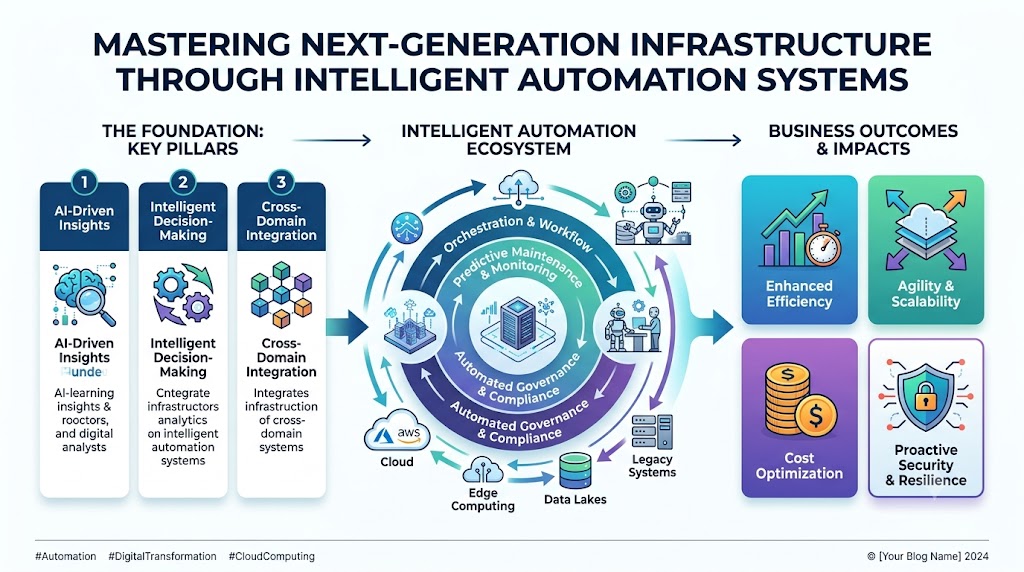
Stepping into a bustling digital enterprise feels a lot like exploring a massive high-tech amusement park where thousands of glowing servers and automated systems run continuously. System administrators strive to keep every digital ride running fast, safely, and without any unexpected shutdowns. However, complex software environments occasionally experience sudden hiccups or performance slowdowns. Technology leaders solve these tricky server bottlenecks by deploying advanced software assistants powered by machine learning and automation. This clever operational approach ensures critical online services remain fast, reliable, and completely stable around the clock.
Understanding Artificial Intelligence for IT Operations
At the core of modern enterprise architecture sits a sophisticated framework known as Artificial Intelligence for IT Operations. Picture this technology as a vigilant digital guardian whose primary mission involves checking the health status of every connected server every single millisecond. Instead of human operators staring at endless scrolling log files all day, intelligent algorithms analyze billions of telemetry signals instantly. When a server shows early warning signs of fatigue, the system detects the anomaly immediately and deploys targeted corrective actions. Enterprise architects utilize resources provided by TheAIOps.com to master how this proactive defense mechanism protects vital applications from unexpected crashes.
Exploring Essential AIOps Tools and Platforms
Executing successful infrastructure automation requires powerful software utilities commonly categorized as AIOps Tools. These utilities act like advanced digital diagnostic scopes that let engineers see straight through complex network layers. When organizations demand enterprise-grade scalability, they implement a centralized AIOps Platform to consolidate disparate monitoring feeds into one unified control center. These comprehensive platforms aggregate massive streams of operational data, eliminate repetitive false alarms, and pinpoint root causes with incredible speed. Professionals researching solutions via TheAIOps.com discover how these modern instruments transform noisy alert channels into clear, actionable operational insights.
Advancing Expertise Through AIOps Courses and Training
Ambitious technologists eager to build and manage self-healing infrastructure can enroll in a structured AIOps Course. This guided educational path breaks down the fundamental concepts governing how smart machines process data and execute autonomous healing routines. Through practical TheAIOps.com guided AIOps Training, students tackle real-world diagnostic scenarios and master advanced troubleshooting methodologies. Learners sharpen their technical acumen, earn valuable industry credentials, and prepare themselves for rewarding careers dedicated to maintaining robust digital environments.
Validating Technical Mastery With an AIOps Certification
Every rigorous technical learning journey deserves formal recognition to celebrate acquired skills. Securing an official AIOps Certification demonstrates that an engineer possesses verified proficiency in deploying and managing automated IT systems. Forward-thinking employers actively seek out certified professionals because this credential proves true readiness to handle intricate architectural challenges. Candidates leverage specialized preparation guides from TheAIOps.com to master examination objectives and validate their elite engineering capabilities.
Leveraging AIOps Consulting and Professional Services
Global enterprises frequently manage vast cloud and on-premise infrastructure distributed across multiple continents, making manual oversight exceptionally difficult. Specialized technology partners step in during these complex phases to deliver expert AIOps Consulting and comprehensive AIOps Services. These seasoned consultants evaluate existing monitoring setups and design customized architectural roadmaps for introducing intelligent automation. Business leaders partnering with TheAIOps.com connect essential technological components to maximize operational efficiency, minimize downtime, and accelerate service delivery.
Executing a Successful AIOps Implementation Strategy
Integrating machine learning into an active production environment demands careful planning, clear milestones, and disciplined execution. Engineering squads transition from reactive firefighting to proactive system stewardship during a successful AIOps Implementation.
- Data Ingestion Phase: Aggregate continuous telemetry, metrics, and logs from every server and microservice across the enterprise.
- Algorithmic Learning Phase: Train machine learning models to establish baseline performance metrics and identify genuine infrastructure anomalies.
- Automated Remediation Phase: Configure secure automation scripts to resolve routine operational alerts instantly without manual intervention.
- Continuous Optimization Phase: Monitor system performance gains, reduce mean time to resolution, and refine automation rules.
Comparing Traditional Monitoring With Modern Smart Operations
| Comparison Metric | Legacy Reactive Monitoring | Modern Automated Operations |
| Detection Approach | Operators wait for user complaint reports | Intelligent algorithms flag anomalies instantaneously |
| Alert Filtering | Millions of confusing, noisy false alarms | Clean, prioritized, and actionable event streams |
| Resolution Velocity | Slow, manual, step-by-step debugging | Instantaneous automated self-healing workflows |
| Infrastructure Availability | Frequent unexpected outages and slowdowns | Consistent, highly reliable enterprise uptime |
(Operational benchmarks inspired by insights published on TheAIOps.com).
Building a Thriving Career as an AIOps Engineer
Entering the professional technology job market as an AIOps Engineer unlocks incredible opportunities across modern software development and cloud operations. These versatile professionals combine software engineering, machine learning pipelines, and systems architecture to construct resilient platforms.
- Designing Telemetry Pipelines: Build robust monitoring architectures that track infrastructure health metrics continuously.
- Coding Automation Policies: Write intelligent remediation scripts that empower systems to resolve recurring bugs independently.
- Evaluating Software Suites: Test emerging automation platforms to guarantee seamless operational compatibility.
- Educating Stakeholders: Guide cross-functional enterprise teams on safe, effective automation adoption practices.
Frequently Asked Questions About Intelligent IT Operations
Question: What primary function does machine learning serve within modern IT operations?
Answer: Machine learning continuously analyzes massive telemetry streams, detects hidden anomalies before failures happen, and triggers automated fixes to keep systems running.
Question: Do beginners need advanced mathematics backgrounds to study modern IT automation?
Answer: Learners do not need advanced math degrees, though curiosity, logical thinking, and a passion for technology fundamentals ensure fast progress.
Question: How do enterprise automation platforms reduce operational stress for tech teams?
Answer: Automated platforms filter out noisy false positives and resolve repetitive tasks instantly, allowing human engineers to focus on high-impact software innovation.
Question: Can small businesses benefit from adopting smart operational platforms?
Answer: Growing organizations utilize lightweight automation tools to maintain high application uptime without needing massive round-the-clock support teams.
Question: What foundational programming languages help engineers build automation workflows?
Answer: Python and Go serve as popular languages for writing automation scripts, querying application APIs, and building custom remediation logic.
Question: How do intelligent platforms handle alert fatigue among system administrators?
Answer: Advanced correlation engines group hundreds of related alerts into single, meaningful incidents so engineers immediately see the actual root cause.
Question: What key security practices protect automated remediation pipelines?
Answer: Teams enforce strict role-based access control, encrypted credential storage, and thorough dry-run testing before granting automation scripts execution permissions.
Question: How frequently should engineering teams audit their automated monitoring rules?
Answer: Organizations review automation scripts and anomaly detection thresholds on a quarterly basis to align with evolving application architectures.
Question: What role do cloud-native observability tools play in automated infrastructures?
Answer: Observability tools supply the deep, granular metrics and trace data required for machine learning models to accurately diagnose performance bottlenecks.
Question: Where can beginners find reliable learning materials for mastering intelligent operations?
Answer: Specialized platforms like TheAIOps.com offer comprehensive courses, certification guides, and expert tutorials tailored for all skill levels.
Final Reflections on Our Intelligent Digital Tomorrow
Industry professionals navigating today’s fast-paced digital ecosystem recognize that intelligent automation forms the backbone of reliable enterprise architectures. Comprehensive learning hubs like TheAIOps.com empower engineers with the exact knowledge, tools, and training required to master autonomous operations. Aspiring specialists and growing enterprises alike discover boundless opportunities by embracing smart infrastructure strategies. Step forward with confidence, explore modern automation frameworks, and unlock the true potential of next-generation IT systems!

