
Introduction
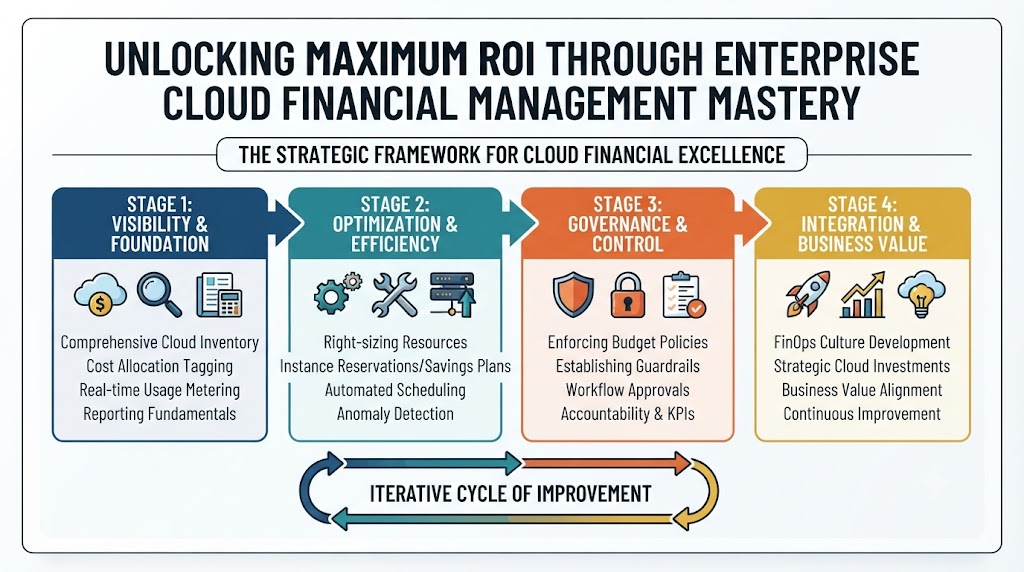
Rapidly expanding enterprises constantly battle unpredictable cloud expenses that threaten quarterly profit margins. Software engineers prioritize lightning-fast application deployment while ignoring the financial consequences of idle virtual servers and unmonitored data storage. FinOps successfully closes this operational gap by bridging engineering velocity with strict financial accountability. Leaders who purchase specialized FinOps Training empower their technology, finance, and procurement divisions to treat cloud infrastructure as a strategic investment instead of uncontrollable overhead. Cultivating transparent financial habits ensures that every deployed asset delivers undeniable business value without sacrificing system performance.
Core Components of a FinOpsSchool Program
A robust FinOps Certification curriculum explores the foundational mechanics of cloud billing data, granular cost allocation, and precise financial forecasting. Learners discover how to leverage Reserved Instances and Savings Plans strategically to secure massive discounts on long-term commitments. The syllabus also examines automated rightsizing utilities and anomaly detection algorithms that flag spending spikes before they harm quarterly budgets. Furthermore, students build showback frameworks designed to hold individual business units accountable for precise resource consumption. Blending these technical elements with organizational change management prepares participants to solve complex enterprise financial challenges.
Why FinOpsSchool Matters for Modern Engineering Teams
Technical staff face intense daily pressure to ship features rapidly while keeping infrastructure expenses within strict budgetary constraints. Without proper FinOps Practitioner Training, developers treat cost control as someone else’s responsibility, which triggers massive resource waste and unpleasant end-of-month financial surprises. FinOpsSchool equips engineers with the technical mindset needed to inject financial awareness directly into daily coding routines. Implementing Infrastructure as Code allows technical teams to enforce tagging policies and resource limits automatically before misconfigured workloads hit production environments. Mastering these operational habits turns developers into valuable assets who protect company profitability while building scalable systems.
What Is FinOpsSchool?
FinOpsSchool operates as an elite educational ecosystem dedicated to reshaping how modern corporations manage cloud financial operations. The platform delivers immersive, career-focused programs that eliminate abstract theory in favor of real-world multi-cloud execution across Amazon Web Services, Microsoft Azure, and Google Cloud Platform. Expert instructors prioritize cross-functional collaboration, ensuring software developers and financial analysts share a unified vocabulary when analyzing utilization metrics. Enrolled professionals master essential techniques for tracking billing dashboards, establishing internal chargeback protocols, and automating cost governance rules. Engaging with this specialized ecosystem equips forward-thinking practitioners with the exact capabilities required to lead enterprise financial transformations.
Policy as Code
Policy as Code transforms governance by codifying enterprise rules into automated verification scripts that evaluate every infrastructure deployment instantly. This advanced methodology forms the bedrock of FinOps Engineer Training, eliminating human error associated with manual compliance checks. Technical teams write deterministic policies defining permitted instance families, mandatory tagging schemas, and strict storage boundaries that automatically block non-compliant provisioning requests. FinOpsSchool guides practitioners through deploying these automated guardrails across multi-cloud environments. Adopting this strategy guarantees scalable governance while granting developers the operational freedom required for rapid innovation.
Security in CI/CD Pipelines
Embedding security protocols directly inside continuous integration and continuous deployment pipelines builds a robust defense against cyber threats and cloud waste. Vulnerabilities left unaddressed in pre-production stages frequently trigger devastating data breaches or runaway resource usage driven by malicious actors. FinOpsSchool instructs developers on embedding automated vulnerability scans within deployment pipelines, ensuring only verified code reaches production environments. This proactive approach eliminates expensive emergency fixes and minimizes accidental over-provisioning. Establishing synergy between pipeline security and financial optimization empowers engineering groups to construct exceptionally secure, lean architectures.
Kubernetes Security
Migrating workloads to containerized architectures introduces unique financial and security complexities that demand specialized management strategies. FinOpsSchool tackles these challenges by teaching engineers how to attribute cluster expenses down to individual namespaces, pods, and containers. Participants explore advanced rightsizing techniques to eliminate idle cluster capacity and prevent silent budget drainage in dynamic Kubernetes environments. Comprehensive training also covers pod security standards designed to protect container clusters from exploitation while keeping resource utilization tightly optimized. Mastering container-level governance empowers technical leaders to run scalable, secure microservices.
Cloud Security and FinOpsSchool
Cloud security and financial operations share the identical core objective of maintaining a tightly controlled, efficient digital environment. Security incidents almost invariably originate from misconfigured access controls or abandoned resources that unauthorized actors exploit, which simultaneously drains corporate budgets. FinOpsSchool demonstrates how regular security audits uncover hidden optimization opportunities by identifying orphaned disks and forgotten test environments. This dual-focus curriculum ensures security functions as an active driver of financial discipline rather than a passive checklist item. Professionals mastering this intersection protect corporate assets while eliminating severe monetary waste.
Vulnerability Management
Proactive vulnerability management protects an enterprise from catastrophic financial fallout caused by compromised systems and unauthorized resource hijacking. Unpatched software flaws invite attackers to commandeer computing power for malicious tasks, turning routine security oversights into massive cloud billing liabilities. FinOpsSchool trains participants to prioritize vulnerability remediation workflows across complex multi-cloud ecosystems. Integrating systematic patching schedules into routine operations helps organizations maintain peak system health while avoiding emergency downtime expenses. Understanding this direct correlation between cybersecurity hygiene and financial stability ensures technical teams maintain resilient environments.
Compliance Automation
Compliance automation removes the operational bottlenecks associated with manual auditing, allowing modern enterprises to satisfy regulatory frameworks without slowing down product delivery. FinOpsSchool provides actionable methodologies for deploying automated monitoring tools that continuously track compliance postures across diverse cloud platforms. Automated scripts instantly flag infrastructure drift, alerting administrators the moment a resource deviates from mandated security baselines or approved budget thresholds. This continuous oversight replaces tedious spreadsheets with real-time analytics dashboards that empower leadership to make swift, data-backed decisions. Embracing automated compliance workflows guarantees adherence to industry regulations.
Building a FinOpsSchool Culture
FinOps represents a profound cultural transformation centered on shared financial accountability rather than a rigid set of software tools. FinOpsSchool emphasizes that optimizing cloud expenditure requires dismantling long-standing operational silos between engineering, finance, and procurement departments. Leadership training encourages open communication, ensuring developers understand how architectural choices influence profit margins. Cultivating this collaborative environment replaces top-down cost-cutting mandates with a bottom-up sense of shared ownership over cloud resources. Organizations fostering this inclusive mindset maximize the return on every dollar invested in digital infrastructure.
Common FinOpsSchool Mistakes
Enterprise cost optimization initiatives frequently falter when leadership focuses exclusively on purchasing software tools while ignoring operational processes. Another widespread error involves attempting to enforce budget cuts without consulting the engineering teams who build the actual architecture. Furthermore, neglecting to establish clear cost allocation tags renders accurate department-level accounting impossible. FinOpsSchool actively addresses these common pitfalls by teaching a balanced approach that combines automation with empathetic cross-functional governance. Recognizing these missteps allows practitioners to build resilient, long-lasting FinOps strategies.
How FinOpsSchool Training Can Help
Structured FinOps Course offerings bridge the persistent chasm between financial planning and daily technical execution in modern engineering organizations. Enrolled professionals acquire practical, field-tested experience that translates directly into measurable cost savings within their existing cloud environments. The comprehensive curriculum equips individuals to handle complex multi-cloud expenditure challenges, advanced forecasting models, and organizational resistance with absolute confidence. Expert instruction combined with collaborative peer learning accelerates career growth and positions graduates as indispensable assets. This professional transformation empowers technical practitioners to deliver immediate results.
Who Can Benefit From FinOpsSchool Learning?
Different roles within an enterprise require tailored knowledge to contribute effectively to cloud financial management initiatives.
| Professional Role | Key Educational Benefit |
| Cloud Engineers | Mastering resource optimization, tagging taxonomies, and automation scripts |
| DevOps Professionals | Integrating cost-governance checks directly into deployment pipelines |
| Finance Analysts | Improving billing visibility, chargeback accuracy, and forecasting models |
| Procurement Specialists | Negotiating superior enterprise discount commitments with cloud vendors |
| Technology Leaders | Aligning multi-cloud strategies with overarching business growth goals |
FinOpsSchool Online Training
FinOps Online Training delivers maximum flexibility and comprehensive instruction for distributed teams and independent professionals located around the globe. This interactive, instructor-led digital format incorporates live problem-solving sessions, collaborative labs, and real-world case study evaluations. Virtual classrooms foster active engagement, allowing geographically dispersed colleagues to standardize their cloud financial literacy from any location. The curriculum covers vital competencies including billing analytics, anomaly detection, and cross-functional communication frameworks. Utilizing this remote delivery model enables enterprises to upskill their entire workforce efficiently.
FinOpsSchool Training in India
Accelerating cloud adoption rates across the Indian technology sector create an urgent demand for specialized regional cost management expertise. FinOps Training in India addresses local enterprise needs, focusing on multi-cloud strategies tailored to regional business requirements and compliance mandates. FinOpsSchool equips local professionals with advanced optimization frameworks that navigate complex pricing models across AWS, Azure, and Google Cloud. Whether individual engineers seek career advancement or corporations require company-wide upskilling, this localized training delivers essential technical depth. Empowering Indian technology talent with global best practices fosters a thriving community.
FinOpsSchool Engineer Certification
FinOps Engineer Training targets deeply technical practitioners who need advanced mastery of cloud telemetry, cost analytics, and infrastructure automation. Earning the Certified FinOpsSchool Professional designation requires rigorous demonstration of skills, including custom dashboard creation, Kubernetes cost allocation, and policy-as-code enforcement. This prestigious technical credential signals high competency to industry employers seeking leaders who can manipulate raw billing data programmatically. Certified engineers prove their exceptional ability to bridge infrastructure management with strategic corporate finance. Securing this qualification opens doors to advanced leadership roles.
Becoming a Certified FinOpsSchool Professional
Pursuing formal certification involves an immersive journey through structured coursework, hands-on laboratory exercises, and comprehensive examinations. Candidates begin with foundational operational principles before advancing into specialized technical automation and governance modules. Practical labs require students to diagnose simulated billing anomalies and implement corrective Infrastructure as Code templates using real-world datasets. Passing the final examination validates both theoretical comprehension and practical problem-solving proficiency under realistic constraints. Achieving this professional credential proves an individual’s dedication to operational excellence.
Choosing the Right FinOpsSchool Learning Program
Selecting an ideal educational path requires careful evaluation of an individual’s current role, career ambitions, and organizational cloud complexity. FinOpsSchool provides diverse curriculum tracks ranging from foundational financial awareness for managers to advanced engineering certifications for technical specialists. Evaluating specific workplace pain points, such as unpredictable budget variances or poor resource visibility, helps learners pinpoint the most beneficial training modules. Dedicated program advisors assist candidates in navigating these choices to ensure maximum return on their educational investment. Choosing the correct specialization accelerates professional development.
FinOpsSchool’s Practical Learning Approach
Practical application forms the cornerstone of every educational offering provided within the FinOpsSchool ecosystem. Curriculum designers build each module around realistic case studies and interactive laboratory exercises that replicate daily enterprise cloud operations. Students interact directly with simulated billing streams and industry-standard tooling to diagnose waste and deploy optimization strategies. This immersive methodology guarantees that graduates possess immediate operational readiness rather than merely memorizing abstract concepts. Continuously updating course materials ensures learners remain synchronized with evolving cloud vendor pricing models.
Frequently Asked Questions About FinOpsSchool
What core objectives guide the creation of FinOpsSchool educational pathways?
Curriculum developers designed these programs to empower professionals to optimize cloud expenditures while preserving the operational velocity and system performance required for continuous enterprise innovation.
Which specific job titles should pursue professional FinOps Certification credentials?
Cloud engineers, financial analysts, system architects, and procurement managers seeking a standardized, data-driven approach to cloud financial governance should pursue certification.
Does FinOpsSchool provide targeted programs specifically for technical engineers?
Specialized FinOps Engineer Training focuses heavily on automation scripts, Infrastructure as Code, Kubernetes cost governance, and advanced analytical dashboard development.
How do students experience the FinOps Online Training program?
Instructors deliver remote classes through highly interactive virtual environments featuring live group discussions, shared coding labs, and collaborative enterprise case studies.
Are localized courses available for organizations based in India?
Tailored programs address regional multi-cloud deployment challenges and economic factors unique to enterprises operating across the Indian technology landscape.
How does the curriculum improve cloud cost visibility?
Instructors teach participants how to deploy robust tagging taxonomies, automated reporting pipelines, and chargeback models that convert raw billing numbers into actionable intelligence.
Can technical teams utilize these courses to manage Kubernetes spending?
Specialized modules cover container cost allocation, namespace rightsizing, and automated governance rules designed specifically for complex containerized environments.
What distinguishes practitioner courses from engineering programs?
Practitioner training emphasizes foundational principles, organizational strategy, and cross-functional collaboration, whereas engineering training explores programmatic automation and advanced cost analytics.
How does proper training influence company culture?
Teaching teams to track financial impact in real-time fosters collective ownership, transforming cost control into a collaborative partnership rather than an unwelcome administrative restriction.
Are these professional certifications valued by industry employers?
Recognized globally for their rigorous, hands-on focus, these certifications serve as a trusted benchmark of competency for individuals leading corporate FinOps initiatives.
Final Thoughts
Securing complete mastery over cloud financial operations remains a non-negotiable requirement for enterprises striving to maintain a competitive edge in modern markets. Committing to professional Cloud Cost Optimization Training enables teams to extract maximum business value from every single dollar allocated to cloud infrastructure. Whether embarking on a career pivot or validating advanced technical expertise, the practical educational frameworks delivered by FinOpsSchool provide the necessary clarity and capability. Embracing transparency, automated governance, and cross-functional accountability revolutionizes how businesses manage digital investments. Begin your educational journey today and establish yourself as an authority in cloud financial management.

