
Introduction
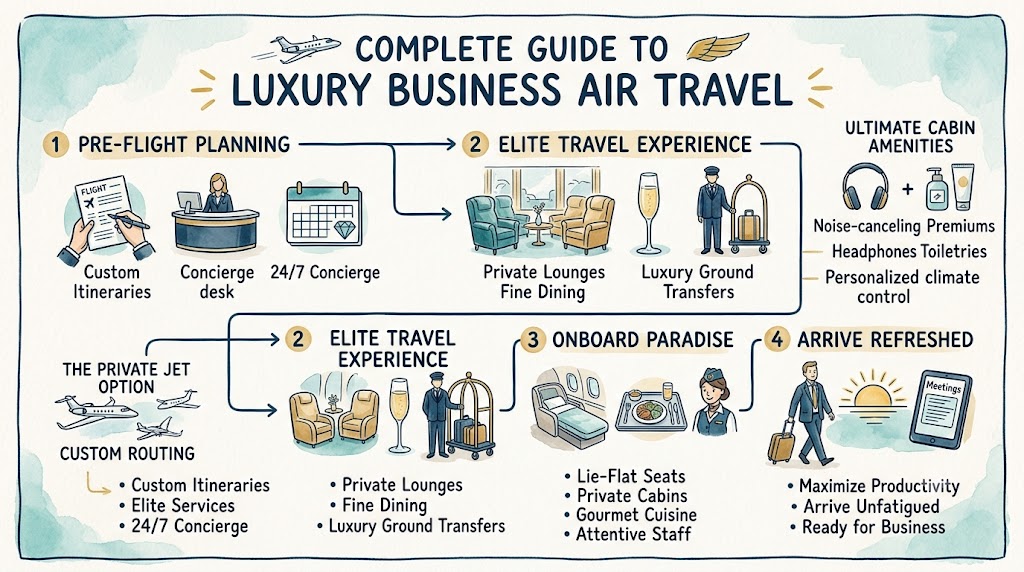
Luxury business air travel has transformed the way executives, entrepreneurs, business owners, and high-profile professionals travel. In today’s fast-paced corporate environment, time is one of the most valuable assets, and traditional commercial air travel often presents challenges such as lengthy security procedures, crowded terminals, flight delays, limited schedules, and reduced privacy. Business aviation offers an efficient alternative that prioritizes flexibility, comfort, productivity, and convenience.
Whether traveling to multiple cities in a single day, attending international business meetings, transporting executive teams, or entertaining important clients, luxury business air travel provides a premium experience designed around the traveler’s schedule rather than fixed airline timetables.
Modern business aircraft feature advanced technology, spacious cabins, high-speed connectivity, private meeting spaces, luxurious seating, and personalized services that allow passengers to remain productive throughout the journey. Business aviation is no longer viewed solely as a luxury—it has become a strategic business tool that helps organizations save valuable time, improve efficiency, and enhance travel experiences.
This comprehensive guide explores every aspect of luxury business air travel, including aircraft types, booking procedures, onboard amenities, safety standards, cost considerations, and practical tips for choosing the right business aviation solution. Whether you are new to private aviation or looking to better understand executive air travel, flyaiaa.com provides valuable insights to help you make informed decisions.
What Is Luxury Business Air Travel?
Luxury business air travel refers to premium aviation services designed specifically for executives, corporate teams, entrepreneurs, and individuals who require greater flexibility, privacy, and efficiency than commercial airlines can provide.
Unlike scheduled airline services, business aviation allows travelers to customize nearly every aspect of their journey. Flights are arranged according to the passenger’s preferred schedule, destination, and operational requirements, making travel significantly more convenient.
Luxury business air travel includes:
- Private jet charters
- Corporate aircraft operations
- Executive air transportation
- Business jet services
- VIP aviation
- Premium charter flights
- Long-range executive travel
The primary objective is to reduce travel time while maximizing productivity and passenger comfort.
Why Business Leaders Choose Luxury Air Travel
Business professionals increasingly choose private aviation because it offers advantages that extend well beyond luxury.
Significant Time Savings
Commercial travel often involves early airport arrivals, long security queues, baggage waits, and potential delays.
Business aviation minimizes these challenges by offering:
- Faster boarding
- Shorter check-in procedures
- Direct flights
- Flexible departure times
- Faster arrivals
This allows executives to focus more on business and less on travel logistics.
Maximum Privacy
Confidential business discussions often cannot be conducted comfortably on commercial flights.
Private aircraft provide secure environments where executives can:
- Hold meetings
- Discuss confidential projects
- Review financial reports
- Conduct negotiations
- Make important business calls
Privacy is one of the biggest reasons organizations invest in executive aviation.
Flexible Scheduling
Business aviation operates around the traveler’s schedule rather than airline timetables.
This flexibility allows:
- Same-day return trips
- Last-minute itinerary changes
- Multi-city travel
- Direct access to regional airports
- Customized departure times
Improved Productivity
Luxury business aircraft effectively become flying offices.
Passengers can:
- Work uninterrupted
- Join virtual meetings
- Prepare presentations
- Review contracts
- Collaborate with colleagues
- Respond to emails
Travel time becomes productive working time.
Superior Comfort
Business aircraft are designed to reduce travel fatigue.
Luxury interiors often include:
- Spacious seating
- Quiet cabins
- Climate-controlled environments
- Comfortable workspaces
- Premium lighting
- Relaxation areas
Passengers frequently arrive feeling refreshed and prepared for meetings.
Types of Luxury Business Aircraft
Business aviation offers aircraft suitable for different travel requirements.
Very Light Jets
These aircraft are ideal for short regional trips.
Typical characteristics include:
- Seating for small groups
- Efficient fuel consumption
- Fast boarding
- Access to smaller airports
- Lower operating costs
Best suited for short business meetings and regional travel.
Light Jets
Light jets offer greater range while maintaining efficiency.
Suitable for:
- Corporate executives
- Small business teams
- Medium-distance flights
- Day trips
These aircraft balance performance and affordability.
Midsize Jets
Midsize business jets provide increased cabin comfort and longer flight capability.
Benefits include:
- More luggage capacity
- Stand-up cabins
- Better in-flight amenities
- Longer nonstop routes
Ideal for growing businesses and executive teams.
Super Midsize Jets
These aircraft combine speed, range, and luxurious interiors.
Features often include:
- High-speed internet
- Conference seating
- Premium entertainment
- Extended nonstop capability
Perfect for international business operations.
Heavy Jets
Heavy business jets are designed for long-distance executive travel.
Advantages include:
- Large cabins
- Multiple seating areas
- Sleeping accommodations
- Advanced communication systems
- Dedicated flight attendants
These aircraft support long international business journeys.
Ultra Long-Range Jets
Designed for nonstop intercontinental travel, these aircraft offer exceptional comfort and performance.
Passengers enjoy:
- Luxury suites
- Large conference areas
- Full-service galleys
- Extended flight endurance
Ideal for global executives traveling between continents.
VIP Airliners
VIP-configured airliners represent the highest level of luxury aviation.
They may include:
- Executive offices
- Conference rooms
- Bedrooms
- Private lounges
- Dining areas
- Premium entertainment
These aircraft are typically used by governments, multinational corporations, and high-profile individuals.
How Luxury Business Air Travel Works
Choosing the Right Aircraft
Selecting the appropriate aircraft depends on:
- Passenger count
- Travel distance
- Airport accessibility
- Cabin requirements
- Luggage volume
- Budget
Proper aircraft selection ensures efficiency and comfort.
Selecting Departure Airports
Private aviation offers access to thousands of airports that commercial airlines do not serve.
Benefits include:
- Reduced ground transportation
- Less congestion
- Faster departures
- Convenient locations
Booking the Flight
Business aviation providers coordinate:
- Flight schedules
- Aircraft selection
- Passenger preferences
- Catering
- Ground transportation
- Special requests
The booking process is designed to be straightforward and personalized.
Passenger Documentation
Depending on the destination, travelers may require:
- Government-issued identification
- Passports
- Visas
- Customs documentation
- Health declarations
International travel requires additional preparation.
Flight Planning
Professional flight planners evaluate:
- Weather
- Fuel requirements
- Airport conditions
- Airspace restrictions
- Alternate airports
This planning helps ensure safe and efficient operations.
Boarding Process
Private aviation eliminates many of the delays associated with commercial terminals.
Passengers often experience:
- Dedicated lounges
- Faster security procedures
- Direct aircraft access
- Personalized assistance
Arrival Experience
Upon landing, passengers typically enjoy expedited departures from the airport, allowing them to quickly reach meetings or accommodations.
Luxury Amenities Available Onboard
Business aircraft are equipped with features that enhance both productivity and comfort.
Common amenities include:
Spacious Cabins
Generous cabin layouts allow passengers to move comfortably during flight.
Luxury Seating
Premium seating offers excellent comfort for both work and relaxation.
High-Speed Connectivity
Many aircraft provide internet access for communication and business operations.
Conference Areas
Dedicated meeting spaces allow teams to conduct productive discussions while flying.
Personalized Dining
Passengers may request customized meals prepared according to dietary preferences.
Entertainment Systems
Modern aircraft frequently include:
- Large displays
- Streaming services
- Music systems
- Wireless connectivity
Sleeping Accommodations
Long-range aircraft often provide lie-flat seating or private sleeping areas for overnight travel.
Cabin Privacy
Noise-reducing interiors create quiet environments for confidential conversations and focused work.
Productivity Benefits of Business Aviation
Luxury business air travel transforms travel time into productive work time.
Passengers can:
- Conduct board meetings
- Finalize presentations
- Review business proposals
- Hold video conferences
- Sign contracts
- Communicate with international offices
This uninterrupted productivity often justifies business aviation for organizations with demanding travel schedules.
Safety Standards in Business Aviation
Safety remains the highest priority in executive aviation.
Professional operators maintain strict standards through:
- Regular aircraft inspections
- Preventive maintenance
- Certified maintenance technicians
- Highly trained flight crews
- Continuous pilot training
- Weather monitoring
- Operational risk assessments
- Regulatory compliance
These measures help maintain high operational reliability.
Choosing the Right Aircraft for Your Needs
Several factors should influence aircraft selection.
Consider:
- Number of passengers
- Flight duration
- International or domestic routes
- Business objectives
- Cabin configuration
- Luggage capacity
- Airport accessibility
- Meeting requirements
Choosing the right aircraft improves both efficiency and passenger satisfaction.
Luxury Business Air Travel vs Commercial Airlines
Business aviation differs from commercial airlines in several important ways.
Scheduling
Business aircraft operate according to passenger schedules rather than fixed airline timetables.
Privacy
Private cabins enable confidential business discussions.
Airport Access
Business aviation can utilize many smaller airports closer to final destinations.
Productivity
Travelers can continue working throughout the flight with minimal interruptions.
Comfort
Luxury interiors provide significantly more personal space and premium amenities.
Customer Experience
Business aviation emphasizes personalized service from departure through arrival.
Factors That Influence Business Air Travel Costs
Several operational factors affect the overall cost of luxury business aviation.
These include:
- Aircraft size
- Flight duration
- Airport fees
- Fuel consumption
- Crew requirements
- Catering preferences
- Ground transportation
- International permits
- Overnight crew accommodations
- Seasonal travel demand
Understanding these variables helps travelers select the most suitable aviation solution.
Common Mistakes to Avoid
Avoid these common planning errors:
- Selecting an aircraft that is too small
- Booking at the last minute when possible
- Ignoring nearby airport options
- Underestimating luggage requirements
- Providing incomplete passenger information
- Overlooking international documentation
- Failing to coordinate ground transportation
- Ignoring weather flexibility
Careful planning helps ensure a smooth travel experience.
Tips for First-Time Luxury Business Travelers
If you are new to business aviation, consider these recommendations.
Book Early
Planning ahead increases aircraft availability and scheduling flexibility.
Communicate Your Preferences
Inform your aviation provider about catering, seating, and travel requirements.
Pack Efficiently
Understand baggage limitations based on aircraft size.
Arrive Prepared
Have identification and travel documents ready before departure.
Maximize Productivity
Bring business materials, electronic devices, and meeting agendas to make the most of your flight.
Environmental Considerations
The business aviation industry continues to invest in more sustainable operations.
Current initiatives include:
- More fuel-efficient aircraft
- Sustainable aviation fuel adoption
- Advanced flight planning
- Reduced emissions technologies
- Lightweight aircraft materials
- Efficient engine designs
These developments support long-term environmental responsibility while maintaining operational excellence.
Frequently Asked Questions
1. What is luxury business air travel?
Luxury business air travel refers to premium aviation services that provide executives, businesses, and private travelers with flexible, comfortable, and efficient transportation using private or corporate aircraft. These services prioritize convenience, privacy, and productivity over traditional airline experiences.
2. How is private aviation different from commercial airlines?
Private aviation offers customized schedules, direct airport access, greater privacy, personalized services, faster boarding, and luxurious onboard amenities. Travelers avoid many of the delays and restrictions commonly associated with commercial airline travel.
3. What types of aircraft are available?
Business aviation includes very light jets, light jets, midsize jets, super midsize jets, heavy jets, ultra long-range aircraft, and VIP-configured airliners. Each aircraft category serves different travel distances, passenger capacities, and business requirements.
4. How far can business jets travel?
Flight range depends on the aircraft type. Some business aircraft are designed for regional trips, while ultra long-range jets are capable of flying nonstop between major international destinations, making them suitable for global business travel.
5. Is business aviation safe?
Yes. Professional operators maintain strict maintenance programs, employ highly trained pilots, follow comprehensive safety procedures, and comply with aviation regulations to ensure safe and reliable operations.
6. Who typically uses luxury business aviation?
Business aviation is commonly used by corporate executives, entrepreneurs, government officials, investors, professional sports teams, entertainers, medical organizations, and companies requiring flexible and efficient transportation.
7. Can private aircraft use smaller airports?
Yes. One of the major advantages of business aviation is access to many regional and private airports that commercial airlines do not serve, reducing travel time and improving convenience.
8. What amenities are available onboard?
Depending on the aircraft, passengers may enjoy luxury seating, conference tables, Wi-Fi, entertainment systems, customized catering, sleeping accommodations, private workspaces, and dedicated flight attendants.
9. How do I choose the right aircraft?
The ideal aircraft depends on passenger numbers, travel distance, luggage requirements, desired cabin features, budget, and operational needs. Consulting experienced aviation professionals helps identify the most suitable option.
10. Is luxury business air travel suitable for international trips?
Absolutely. Many business aircraft are specifically designed for long-range international travel, offering exceptional comfort, advanced communication systems, and the flexibility required for global business operations.
Conclusion
Luxury business air travel has become an essential solution for executives, entrepreneurs, and organizations that value efficiency, flexibility, privacy, and premium service. By eliminating many of the limitations of commercial airline travel, business aviation allows travelers to maximize productivity, reduce travel stress, and reach destinations on their own schedules. Whether traveling for important meetings, international business expansion, or corporate events, the ability to customize every aspect of the journey creates a superior travel experience.
Choosing the right aircraft, understanding available services, and planning travel effectively are key factors in making the most of business aviation. From very light jets for regional trips to ultra long-range aircraft for global travel, every category offers unique advantages designed to meet different business needs. Combined with experienced flight crews, advanced safety standards, and personalized onboard amenities, luxury business aviation continues to set the standard for executive travel.

