
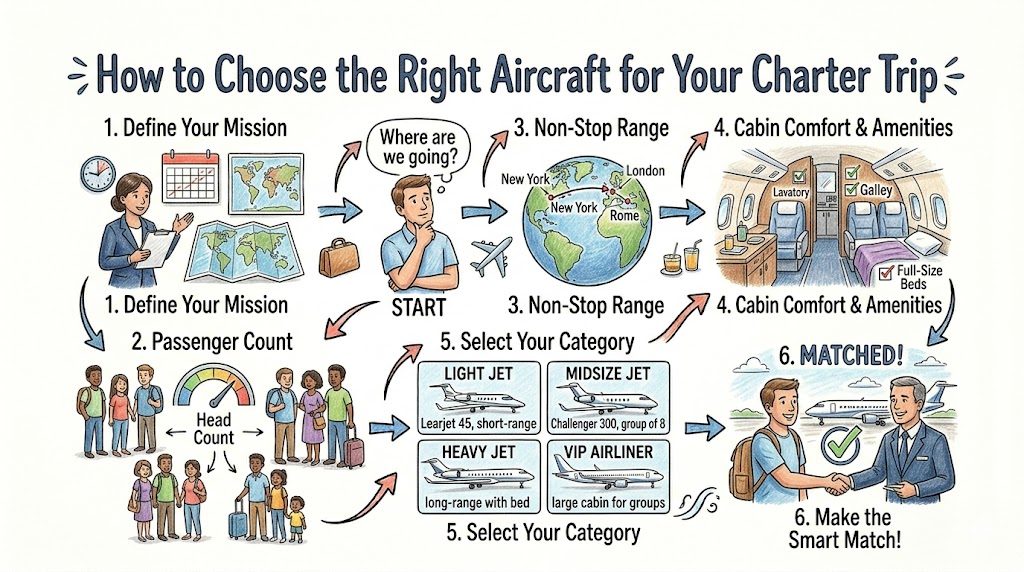
Introduction
Choosing the right aircraft is one of the most important decisions when planning a private jet charter. The aircraft you select affects comfort, cost, flight range, luggage capacity, airport access, travel time, and the overall passenger experience. A jet that is too small may create space or baggage limitations, while an aircraft that is larger than necessary may increase costs without adding real value to the trip.
Private aviation is highly flexible, but that flexibility works best when the aircraft matches the purpose of travel. A short regional business flight may need a light jet or turboprop, while a long international journey may require a heavy or ultra long-range aircraft. Families, executives, leisure travelers, and corporate teams all have different needs. By understanding aircraft categories, passenger requirements, and trip details, travelers can make smarter decisions and enjoy a smoother, more efficient charter experience.
Real-world Use Cases
Aircraft selection depends heavily on the type of trip. A solo executive traveling to a nearby city for a same-day meeting may only need a compact and efficient aircraft. A family going on vacation may need more cabin space, luggage capacity, and child-friendly comfort. A corporate team visiting multiple cities may prioritize productivity, Wi-Fi, and schedule flexibility.
A luxury traveler flying overseas may need long-range capability, sleeping space, premium catering, and larger cabin comfort. Meanwhile, a traveler heading to a remote resort may need an aircraft that can safely operate from a smaller airport. These examples show why there is no single “best” charter aircraft; the right choice depends on the route, passengers, comfort expectations, and travel purpose.
Evaluation Criteria for Choosing a Charter Aircraft
Before selecting an aircraft for a charter trip, travelers should evaluate:
- Number of passengers
- Flight distance and range
- Cabin size and seating layout
- Luggage requirements
- Trip purpose
- Airport access and runway requirements
- Budget and pricing
- In-flight amenities
- Wi-Fi and business needs
- Family or pet travel requirements
- International travel capability
- Safety and operator standards
A good charter advisor will use these details to recommend the best aircraft options for the trip.
1- Consider the Number of Passengers
Passenger count is the first factor in choosing the right aircraft. A private jet should provide enough seating for everyone while still offering comfort and safe movement within the cabin.
A small aircraft may be suitable for one to four passengers on a short trip. Larger groups may require a midsize, super midsize, or heavy jet. If the trip includes executives, family members, children, or support staff, choose an aircraft that allows everyone to travel comfortably together.
2- Match Aircraft Range with Flight Distance
Every aircraft has a different range. Some aircraft are designed for short regional routes, while others can fly long distances without stopping for fuel.
For short domestic flights, turboprops or light jets may be efficient. For coast-to-coast or international routes, travelers may need super midsize, heavy, or ultra long-range jets. Choosing the correct range helps avoid unnecessary fuel stops and improves overall travel efficiency.
3- Review Cabin Comfort and Seating Layout
Cabin comfort matters, especially on longer flights. Seating layout, legroom, cabin height, table space, and onboard privacy can significantly affect the passenger experience.
Business travelers may need club seating and tables for work. Families may prefer more open seating and space for children. Luxury travelers may prioritize reclining seats, quieter cabins, and premium interior finishes.
4- Confirm Luggage Capacity
Luggage space varies widely by aircraft type. This is especially important for family vacations, ski trips, golf trips, destination weddings, or extended international travel.
Before booking, share exact luggage details with the charter provider. Include suitcases, sports equipment, strollers, pet carriers, business materials, or oversized items. This helps prevent baggage issues on departure day.
5- Understand the Purpose of the Trip
The purpose of the trip should guide aircraft selection. A business trip may require Wi-Fi, quiet workspace, and efficient routing. A family vacation may require cabin comfort, flexible baggage, and child-friendly service.
For a luxury leisure trip, travelers may want premium seating, custom catering, and long-range comfort. The more clearly you define the trip purpose, the easier it becomes to choose the right aircraft.
6- Check Airport and Runway Requirements
Not every aircraft can operate from every airport. Some smaller airports have shorter runways, limited facilities, or specific operating restrictions.
Turboprops and light jets may access smaller airports more easily than larger aircraft. Heavy jets may require longer runways and larger airport infrastructure. If your destination is near a resort, remote location, or private airfield, aircraft suitability must be reviewed carefully.
7- Compare Budget and Pricing
Aircraft size, range, flight time, crew requirements, and airport fees all influence charter pricing. Larger aircraft generally cost more to operate, but they may be necessary for long flights or larger groups.
Travelers should avoid choosing the biggest aircraft automatically. The goal is to choose an aircraft that fits the trip properly without paying for unnecessary size, range, or features.
8- Consider Speed and Travel Time
Jets usually fly faster than turboprops, making them better for longer routes or time-sensitive business travel. However, for shorter routes, the total time difference may be smaller than expected.
If the destination is nearby or involves a short runway, a turboprop may be practical and cost-efficient. For longer trips, jets can reduce travel time and provide a smoother passenger experience.
9- Review In-Flight Amenities
Amenities can vary by aircraft. Some aircraft include basic seating and limited service, while larger jets may offer premium cabins, entertainment systems, lavatories, Wi-Fi, and catering options.
Before booking, ask about:
- Wi-Fi availability
- Cabin seating style
- Lavatory access
- Power outlets
- Entertainment systems
- Catering options
- Cabin crew availability
Amenities should match the length and purpose of the trip.
10- Assess Business Productivity Needs
For executives and corporate teams, the aircraft should support productivity. This may include a quiet cabin, tables, Wi-Fi, power access, and privacy for discussions.
A short regional trip may only require basic connectivity, while a longer executive flight may need a more complete workspace. Choosing an aircraft with suitable business features allows passengers to make better use of flight time.
11- Plan for Family or Pet Travel
Families and pet owners may have special travel needs. Families may need additional space, child-friendly meals, entertainment, and flexible baggage. Pet owners should confirm cabin policies, cleaning requirements, and pet comfort arrangements.
Private aviation can be very family-friendly, but these details should be discussed before booking to ensure the selected aircraft is appropriate.
12- Consider International Travel Requirements
International charter trips may require longer range, larger cabins, customs coordination, crew planning, and additional comfort features.
For long-haul travel, passengers may need sleeping arrangements, enhanced catering, larger lavatories, and extended luggage capacity. The aircraft should be selected with both range and comfort in mind.
Common Private Charter Aircraft Types
Turboprops
Turboprops are efficient aircraft designed for short regional flights and smaller airports.
Best use case: Short trips, remote destinations, cost-conscious travel
Passenger suitability: Small groups
Range suitability: Short to moderate routes
Comfort level: Practical and efficient
Typical traveler profile: Regional business travelers, resort visitors, small family groups
Very Light Jets
Very light jets are compact, fast, and efficient for short private flights.
Best use case: Short business trips and quick regional travel
Passenger suitability: Small passenger groups
Range suitability: Short routes
Comfort level: Comfortable for brief flights
Typical traveler profile: Solo executives, couples, small business travelers
Light Jets
Light jets are popular for regional and short-to-medium private charter trips.
Best use case: Business meetings, weekend trips, small family travel
Passenger suitability: Small groups
Range suitability: Short to medium routes
Comfort level: Better cabin comfort than very light jets
Typical traveler profile: Executives, small teams, leisure travelers
Midsize Jets
Midsize jets provide more cabin space, better range, and improved passenger comfort.
Best use case: Medium-distance business or leisure travel
Passenger suitability: Medium-sized groups
Range suitability: Regional to longer domestic routes
Comfort level: More spacious and comfortable
Typical traveler profile: Corporate teams, families, frequent travelers
Super Midsize Jets
Super midsize jets offer strong range, speed, and cabin comfort for longer trips.
Best use case: Longer domestic routes and shorter international trips
Passenger suitability: Medium to larger groups
Range suitability: Long-range domestic and select international routes
Comfort level: High comfort with improved amenities
Typical traveler profile: Executives, luxury travelers, corporate groups
Heavy Jets
Heavy jets are designed for long-distance travel, larger groups, and premium comfort.
Best use case: Long-haul flights and executive travel
Passenger suitability: Larger groups
Range suitability: Long-range domestic and international travel
Comfort level: Spacious and premium
Typical traveler profile: Business executives, luxury travelers, international families
Ultra Long-Range Jets
Ultra long-range jets are built for extended international flights with high comfort and advanced amenities.
Best use case: Global travel and nonstop long-haul routes
Passenger suitability: Larger groups or VIP travelers
Range suitability: Very long-distance international flights
Comfort level: Highest level of comfort
Typical traveler profile: Global executives, luxury travelers, international business teams
Small Jets vs Larger Jets
Small jets are often more cost-effective for short trips and small groups. They are easier to operate on regional routes and may access smaller airports.
Larger jets provide more space, range, amenities, and comfort. They are better for long flights, larger groups, and travelers who want a more premium cabin experience.
Turboprops vs Jets
Turboprops are efficient for short routes and smaller airports. They may be more affordable and practical for regional travel.
Jets are faster, smoother at higher altitudes, and better suited for longer routes. The right choice depends on distance, airport access, passenger expectations, and budget.
Short-Range vs Long-Range Aircraft
Short-range aircraft are ideal for regional trips where speed, cost efficiency, and airport access matter most.
Long-range aircraft are better for extended routes where nonstop capability, cabin comfort, and passenger rest become more important.
Budget-Focused vs Comfort-Focused Selection
A budget-focused aircraft selection prioritizes efficiency and avoids unnecessary size or amenities. This works well for short trips and practical travel needs.
A comfort-focused selection prioritizes cabin space, seating, amenities, and long-flight convenience. This is useful for luxury travel, family vacations, or international trips.
Business Travel vs Leisure Travel Aircraft Needs
Business travelers often prioritize speed, privacy, Wi-Fi, schedule flexibility, and productivity.
Leisure travelers may prioritize comfort, luggage space, pet policies, family seating, and access to vacation destinations. Aircraft selection should reflect the actual travel experience desired.
Benefits of Choosing the Right Aircraft
Choosing the right aircraft helps travelers:
- Save money by avoiding unnecessary aircraft size
- Improve comfort for all passengers
- Reduce travel stress
- Avoid luggage limitations
- Increase in-flight productivity
- Access the right airports efficiently
- Support family, pet, or group needs
- Improve the overall private aviation experience
The right aircraft makes the trip smoother from booking to landing.
Practical Tips for Choosing the Right Charter Aircraft
Match Aircraft Size with Passenger Count
Do not choose based only on aircraft appearance or luxury level. Select an aircraft that fits the number of passengers comfortably and safely.
Avoid Overpaying for Unnecessary Size
A larger jet may look appealing, but it may not be cost-effective for a short trip with only a few passengers.
Confirm Luggage Capacity Before Booking
Always discuss luggage in detail. This is especially important for vacations, sports trips, events, and long stays.
Ask About Onboard Amenities
Do not assume every aircraft has Wi-Fi, entertainment, catering, or full lavatory access. Confirm amenities before booking.
Compare Aircraft Options
Ask the charter provider to explain the benefits and trade-offs of each option. Compare cost, comfort, range, and airport access.
Work with a Charter Advisor
A knowledgeable charter advisor can match your route, passenger count, budget, and comfort needs with the most suitable aircraft.
Plan Early During Peak Travel Seasons
Aircraft availability can become limited during holidays, school breaks, and major events. Early planning improves aircraft selection and pricing options.
FAQs
1- What is the best aircraft for short charter trips?
Turboprops, very light jets, and light jets are often best for short trips. They are efficient, practical, and usually more cost-effective for regional travel.
2- What aircraft is best for long-distance travel?
Heavy jets and ultra long-range jets are better for long-distance travel. They offer greater range, larger cabins, more comfort, and better amenities for extended flights.
3- How many passengers can a private charter aircraft carry?
Passenger capacity depends on the aircraft type. Small jets may carry a few passengers, while heavy and ultra long-range jets can carry larger groups more comfortably.
4- How do luggage limits work on private aircraft?
Luggage capacity depends on aircraft size, baggage compartment design, and passenger load. Travelers should provide luggage details before booking to avoid space issues.
5- Why do charter aircraft prices vary so much?
Pricing depends on aircraft size, route distance, flight time, crew needs, airport fees, fuel, and additional services. Larger aircraft generally cost more to operate.
6- Are turboprops better than jets for some trips?
Yes. Turboprops can be ideal for short routes, smaller airports, and cost-conscious travel. Jets are usually better for longer distances and faster travel.
7- What aircraft is best for family charter travel?
Families often need aircraft with comfortable seating, luggage space, and flexible cabin arrangements. Midsize or larger aircraft may be better for families with children, pets, or extra bags.
8- What amenities should business travelers look for?
Business travelers should ask about Wi-Fi, power outlets, tables, cabin privacy, quiet seating, and phone or meeting capabilities. These features support productivity during flight.
9- Can private aircraft land at smaller airports?
Many private aircraft can access smaller airports, but suitability depends on runway length, aircraft type, weather, and airport facilities. This should be confirmed before booking.
10- How does a charter advisor help with aircraft selection?
A charter advisor reviews your route, passenger count, luggage, budget, comfort needs, and airport access. They recommend aircraft options that best match the trip requirements.
Conclusion
Choosing the right aircraft for your charter trip is essential for comfort, efficiency, safety, and cost control. The best aircraft is not always the largest or most expensive; it is the one that fits your route, passenger count, luggage needs, airport access, and travel purpose. By understanding the differences between turboprops, light jets, midsize jets, heavy jets, and long-range aircraft, travelers can make more confident decisions. Working with an experienced charter advisor and sharing trip details clearly helps avoid unnecessary costs and improves the overall private aviation experience. With the right planning, your charter flight can be smooth, comfortable, and perfectly matched to your journey.

