
Introduction
Private air charter has become an increasingly popular travel option for business professionals, families, luxury travelers, and anyone seeking greater convenience, privacy, and flexibility. Unlike commercial airlines, private charter flights offer personalized schedules, shorter airport procedures, and a more comfortable travel experience. However, for first-time travelers, flying on a private aircraft can raise questions about safety, preparation, and what to expect.
The good news is that safety is the highest priority in private aviation. Reputable charter operators follow strict maintenance programs, employ highly trained flight crews, and comply with aviation regulations to ensure every flight operates safely. As a passenger, understanding basic safety practices can make your journey smoother, more comfortable, and more enjoyable.
This guide explains everything new travelers should know about private air charter safety, from choosing a reliable charter provider to following onboard safety procedures and preparing for your flight with confidence.
Why Safety Is the Foundation of Private Air Charter Travel
Private air charter offers convenience, but safety remains the top priority for every flight. Every aircraft, crew member, and operational procedure is designed to minimize risks and provide passengers with a secure travel experience.
Following proper safety practices helps:
- Protect passengers and crew
- Ensure smooth flight operations
- Improve travel confidence
- Reduce unnecessary delays
- Enhance overall comfort
- Support emergency preparedness
- Make the travel experience more enjoyable
Being informed allows first-time travelers to feel more relaxed throughout their journey.
How Private Air Charter Flights Operate
Understanding the basic charter process helps eliminate uncertainty.
A typical private charter journey includes:
- Booking through a charter provider
- Selecting a suitable aircraft
- Receiving travel confirmation
- Arriving at a private terminal or Fixed Base Operator (FBO)
- Completing passenger verification
- Attending a safety briefing
- Boarding directly from the terminal
- Flying to the destination
- Quick arrival and ground transportation
Because there are fewer passengers and streamlined procedures, the travel experience is often faster and more personalized than commercial aviation.
Choose a Reputable Charter Provider
One of the most important safety decisions happens before booking.
Look for providers that offer:
- Licensed flight operations
- Well-maintained aircraft
- Experienced flight crews
- Transparent safety policies
- Responsive customer support
- Clear communication throughout the booking process
Asking questions about aircraft maintenance and operational procedures demonstrates responsible travel planning.
Verify Your Travel Documents
Before departure, ensure all required documents are ready.
Depending on your trip, you may need:
- Government-issued photo identification
- Passport
- Required visas
- Travel confirmations
- Passenger information forms
Having everything organized helps prevent unnecessary delays before departure.
Arrive Prepared
Private charter flights generally require less waiting time than commercial airlines, but arriving prepared remains important.
Helpful preparation includes:
- Arriving at the recommended time
- Confirming ground transportation
- Packing luggage appropriately
- Monitoring weather updates
- Bringing required identification
- Keeping important documents accessible
Preparation allows boarding to proceed efficiently.
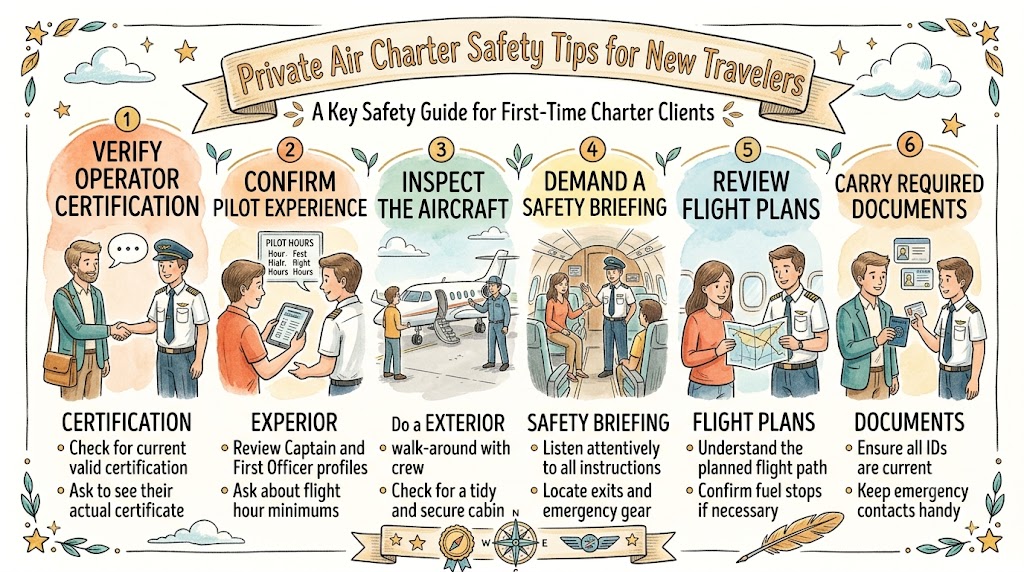
Listen Carefully During the Safety Briefing
Every flight begins with a safety briefing.
Even experienced travelers should pay close attention.
Topics typically include:
- Seat belt operation
- Emergency exits
- Emergency equipment
- Oxygen systems
- Fire extinguisher locations
- Cabin communication
- Evacuation procedures
Although emergencies are rare, understanding these procedures increases preparedness.
Follow Flight Crew Instructions
The flight crew’s primary responsibility is passenger safety.
Always:
- Listen carefully
- Follow boarding instructions
- Remain seated when instructed
- Fasten your seat belt when required
- Ask questions respectfully
- Inform the crew of any concerns
Cooperation contributes to a safe and comfortable flight for everyone.
Pack Smart
Packing correctly improves safety and convenience.
Bring only necessary items and follow luggage recommendations.
Consider packing:
- Identification
- Prescription medications
- Electronics
- Chargers
- Travel documents
- Comfortable clothing
- Personal essentials
Avoid bringing prohibited or hazardous items unless specifically permitted.
Understand Luggage Limits
Private aircraft vary in size.
Because baggage compartments differ, confirm luggage limits before packing.
Helpful tips include:
- Use lightweight luggage
- Avoid oversized bags
- Label your belongings
- Inform the operator about special equipment
- Pack efficiently
Planning ahead helps prevent last-minute adjustments.
Wear Comfortable Clothing
Choose clothing that supports comfort and mobility.
Recommended attire includes:
- Comfortable pants
- Breathable shirts
- Closed-toe shoes
- Light jacket
- Sunglasses
Avoid restrictive clothing or footwear that could make boarding or moving around the cabin more difficult.
Stay Hydrated
Cabin air can be dry, especially during longer flights.
Maintain comfort by:
- Drinking water regularly
- Limiting excessive caffeine
- Avoiding excessive alcohol
- Eating light meals before departure
Good hydration contributes to a more comfortable journey.
Prevent Motion Sickness
Although private aircraft generally provide smooth travel, some passengers may experience mild motion discomfort.
Helpful strategies include:
- Eat a light meal beforehand
- Stay hydrated
- Focus on the horizon when possible
- Inform the crew if you feel uncomfortable
- Discuss preventive medication with your healthcare provider if necessary
Most first-time travelers adjust quickly.
Understand Weather Decisions
Weather plays an important role in aviation safety.
Pilots may delay or modify flights because of:
- Thunderstorms
- Strong winds
- Low visibility
- Ice
- Turbulence
- Airport conditions
Although schedule changes may be inconvenient, safety always comes first.
Trust the crew’s professional judgment regarding weather-related decisions.
Traveling with Children
Families often enjoy the convenience of private charter travel.
Parents can prepare by:
- Explaining the flight experience
- Bringing entertainment
- Packing snacks
- Supervising children during boarding
- Following crew instructions
Proper preparation helps children feel comfortable and secure.
Traveling with Pets
Many charter operators welcome pets.
Before traveling:
- Confirm pet policies
- Carry health documents
- Bring water and food
- Pack familiar items
- Inform the operator in advance
Advance planning creates a safer and more comfortable experience for both pets and passengers.
Use Electronic Devices Responsibly
Modern private aircraft often provide onboard connectivity.
Passengers should:
- Silence devices
- Use headphones
- Follow crew instructions during takeoff and landing
- Keep phone conversations brief
- Avoid disturbing fellow travelers
Responsible device use contributes to a pleasant cabin environment.
Respect Cabin Safety Rules
Even on luxury flights, basic cabin safety remains important.
Always:
- Wear your seat belt when instructed
- Keep aisles clear
- Store loose items securely
- Avoid standing during turbulence
- Follow emergency instructions immediately
Simple habits help reduce unnecessary risks.
Common Safety Mistakes First-Time Charter Travelers Make
Many mistakes are easily avoided with preparation.
Examples include:
- Arriving late
- Ignoring safety briefings
- Overpacking luggage
- Forgetting identification
- Distracting the flight crew
- Standing during turbulence
- Removing seat belts unnecessarily
- Bringing prohibited items
- Assuming private flights have no safety procedures
- Failing to communicate medical concerns
Being aware of these issues improves your overall experience.
Benefits of Following Private Air Charter Safety Tips
Following recommended safety practices provides many advantages.
Improved Safety
Prepared passengers contribute to safer flight operations.
Greater Confidence
Knowing what to expect reduces anxiety.
Faster Boarding
Preparation helps the boarding process remain efficient.
Better Communication
Passengers who understand procedures communicate more effectively with the crew.
Increased Comfort
Following safety guidance creates a more relaxing journey.
Reduced Stress
Preparation minimizes unexpected problems before departure.
Private Air Charter Safety Checklist
Before Departure:
- Confirm booking
- Carry identification
- Pack appropriately
- Arrive on time
- Monitor weather
- Prepare medications
- Confirm luggage limits
During Boarding:
- Listen to crew instructions
- Attend the safety briefing
- Secure luggage
- Fasten your seat belt
During the Flight:
- Stay hydrated
- Keep aisles clear
- Use electronic devices responsibly
- Follow safety instructions
- Inform the crew of concerns
After Landing:
- Wait for instructions
- Gather belongings carefully
- Exit safely
- Follow ground staff guidance
Frequently Asked Questions
1. Are private charter flights safe?
Yes. Reputable charter operators maintain strict safety standards, perform regular aircraft maintenance, and employ qualified flight crews. Passenger safety remains the highest priority throughout every stage of the journey.
2. Do private charter flights have security procedures?
Yes. While procedures may differ from commercial airports, passenger identity verification and operational safety checks remain an important part of private aviation.
3. How early should I arrive?
Most private charter operators recommend arriving approximately 20 to 30 minutes before departure, although international flights may require additional time.
4. What should I bring?
Bring government-issued identification, travel documents, prescription medications, personal essentials, and any items requested by your charter provider.
5. Can I travel with medication?
Yes. Keep medications in their original packaging whenever possible and inform the crew if you have any medical conditions that may require assistance.
6. Can children safely travel on private charter flights?
Absolutely. Private charter flights are suitable for families, provided children are supervised and parents follow all safety instructions.
7. Are pets allowed?
Many charter providers accommodate pets. Confirm policies before travel and ensure your pet has any required documentation.
8. What happens if weather conditions change?
Pilots may delay, reroute, or reschedule flights if weather conditions affect safety. These decisions prioritize passenger and crew well-being.
9. Can I use electronic devices during the flight?
Electronic devices are generally permitted, but passengers should always follow crew instructions regarding their use during critical phases of flight.
10. What should I do during an emergency?
Remain calm, listen carefully to the crew, keep your seat belt fastened when instructed, and follow all emergency procedures provided during the safety briefing.
Conclusion
Private air charter offers a safe, efficient, and comfortable way to travel, especially for those seeking greater flexibility and personalized service. For first-time travelers, understanding basic safety practices can make the experience more enjoyable and less stressful. From selecting a reputable charter provider and preparing travel documents to listening carefully during safety briefings and following crew instructions, every step contributes to a smooth journey.
By staying informed, packing wisely, respecting safety procedures, and communicating openly with the flight crew, new travelers can confidently enjoy the many advantages of private aviation while ensuring their trip is both safe and memorable.

